Arborist Services in Bryan, College Station & the Brazos Valley
Brazos Valley Stump Grinding and Tree Service offers professional arborist services across Bryan, College Station, Franklin, and Navasota. Not every tree problem is visible from the ground. Our arborist checks for disease, structural weakness, and root issues, giving you a clear diagnosis before deciding on trimming, treatment, or removal.
What Arborist Services Actually Involves
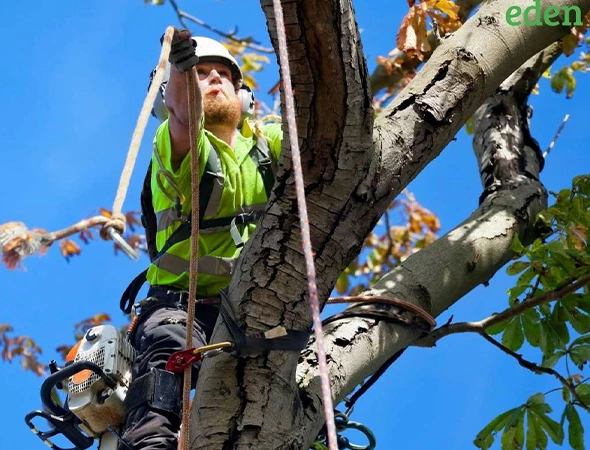
An arborist visit is different from a routine trim or cut — it’s a focused health check on the tree itself. We look at the leaves, bark, canopy shape, and base of the trunk for signs of disease, pest damage, or structural weakness that wouldn’t be obvious to someone just glancing at the tree.
Soil conditions and root health get checked too, since problems below ground often show up as symptoms above it much later. After the inspection, we give you a plain explanation of what’s actually going on with the tree and what your realistic options are, whether that’s simple monitoring, targeted treatment, corrective trimming, or in more serious cases, removal before the problem spreads to nearby trees.
When a Tree Needs More Than a Quick Look
Off-Season Leaf Color Change
Leaves are changing color or wilting during a season when the tree should be full and healthy, especially if it's happening on just one side of the tree.
Uneven Leaf Drop
The tree is dropping leaves well outside of normal fall shedding, or losing them in patches instead of evenly across the whole canopy.
Nearby Trees Have Declined
Nearby trees of the same species have died or declined recently, since some tree diseases spread from one tree to another close by.
You Just Want a Straight Answer
You're not sure if a tree just needs a trim or if something more serious is going on, and want an honest answer before spending money.
Recent Construction or Root Disturbance
The tree recently went through construction nearby, root disturbance, or soil compaction, all of which can stress a tree in ways that show up slowly.
What Happens During an Arborist Visit
Visual Inspection
We walk the property and look closely at the tree’s leaves, bark, and canopy.
Soil & Root Check
We check the soil and root area near the base for signs of stress or damage.
Diagnosis
We identify what’s actually causing the problem, whether it’s disease, pests, or root issues.
Plain-Language Explanation
We explain what we found in plain terms, without jumping straight to a sales pitch.
Recommendation
We recommend next steps, whether that’s monitoring, treatment, trimming, or removal if it’s serious.
Why Oak Wilt Is a Region-Wide Concern, Not Just a Local One
Across Bryan, College Station, Franklin, and Navasota, the Post Oak Savannah’s mix of post oak, live oak, and red oak makes oak wilt a real concern for the whole region, not just one town. Because red oaks help spread the disease and live oaks connect through shared root systems, one infected tree can put an entire row of neighboring oaks at risk without obvious warning.
this is also why the timing of oak pruning matters more here than it does elsewhere, since fresh cuts made at the wrong time of year are an easy entry point for infection. If a tree ends up too far gone to save, prompt tree removal limits how far the disease can spread, Tree planting afterward is often the next step, and a species that is not an oak is worth considering on a property that has already lost one
Is My Oak Tree Showing Signs of Oak Wilt?
Oak wilt is a fungal disease that kills oaks across Texas, including the Brazos Valley. What it looks like depends on which kind of oak you have, and that is the first thing worth knowing.
Live oaks show it in the leaf veins. The veins turn yellow, then brown, while the leaf tissue between them stays green for a while. That pattern is called veinal necrosis and it is close to diagnostic. Live oaks usually decline over months, sometimes a couple of years, and they spread it to neighboring live oaks through connected roots. That is why it tends to move through a row of trees rather than hitting one at random.
Red oaks go fast. Spanish oak, Shumard, and blackjack turn pale green or bronze from the leaf tips and margins inward, then wilt. A red oak can die within weeks of showing symptoms. Red oaks also matter more than their numbers suggest, because they are the only oaks that grow fungal mats, and sap-feeding beetles carry spores from those mats to fresh wounds on other trees.
Post oaks are less susceptible than either, which is worth knowing in a region named for them.
Drought stress can look similar, especially in a hot Brazos Valley summer, so a proper diagnosis matters before anyone starts cutting or spending. Getting it wrong in either direction is expensive.
When Not to Prune an Oak
Do not prune oaks between February and June. That is when the sap beetles are active and fungal mats are producing spores, so a fresh cut in that window is the easiest way for oak wilt to get into a healthy tree.
July through January is the safe stretch. Mid-winter is best.
If you have to cut an oak in the risky window, paint the wound immediately. Storm damage does not wait for the calendar. This is the part that surprises people, because the standard advice everywhere else is to leave pruning cuts unpainted and let them seal naturally. In oak wilt country that advice is reversed. Paint or wound dressing goes on within minutes, not at the end of the day.
The same applies to any accidental wound — a mower strike, a limb torn off in wind, damage from construction equipment.
FAQs
Healthy mature trees benefit from a check every two to three years. Anything showing unusual symptoms should be looked at sooner, and so should trees near recent construction, storm damage, or a known disease in the neighborhood.
Usually, yes. Drought stress and disease can look similar from a distance but they show different patterns up close, and the treatment and urgency are very different depending on which one it is.
Yes. If oak wilt is confirmed on one tree, the trees around it need looking at, because live oaks share root systems and the disease moves through them. Catching a second infection early gives that tree a chance that a late diagnosis does not.
No. Monitoring, a change in watering, or corrective pruning solves a good share of what we get called out to look at. Removal is for trees whose decline cannot be reversed or that have become a genuine safety risk.
Yes. Commercial properties use assessments to manage liability around large or aging trees near parking lots, walkways, and buildings. A documented assessment also supports decisions about removal or maintenance for insurance purposes.
Contact Us
Not sure what’s going on with a tree on your property? Contact Brazos Valley Stump Grinding and Tree Service at (979) 774-4800 or brazosvalleystumpandtree@gmail.com to schedule an arborist visit.


